
NASA Nancy Grace Roman: She Opened the Heavens
Celebrating the “Mother of Hubble” and the launch of the next great space telescope
Nancy Grace Roman: NASA’s First Chief of Astronomy
On August 30, 2026, NASA will launch the Nancy Grace Roman Space Telescope from Kennedy Space Center—a tribute to the woman whose vision helped make the Hubble Space Telescope a reality. This CME webpage, created with L.M. Levie, Poet Laureate of The Explorers Club and CME STEM Leadership Awards Committee Member, marks the occasion with his original poem, She Opened the Heavens, along with the musical video below bringing it to life.
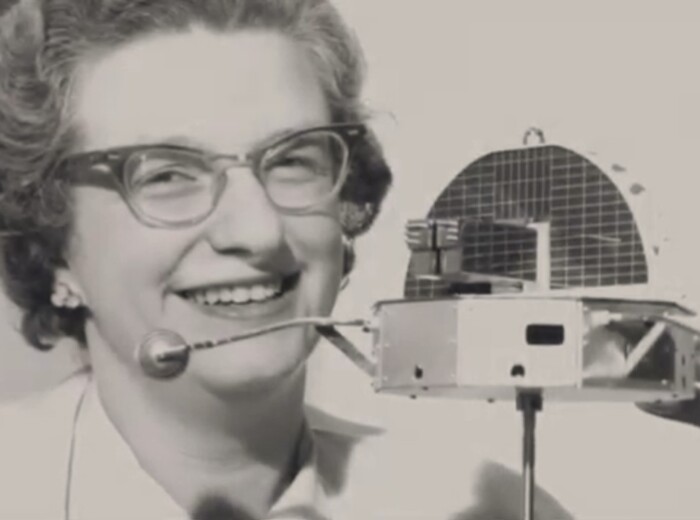
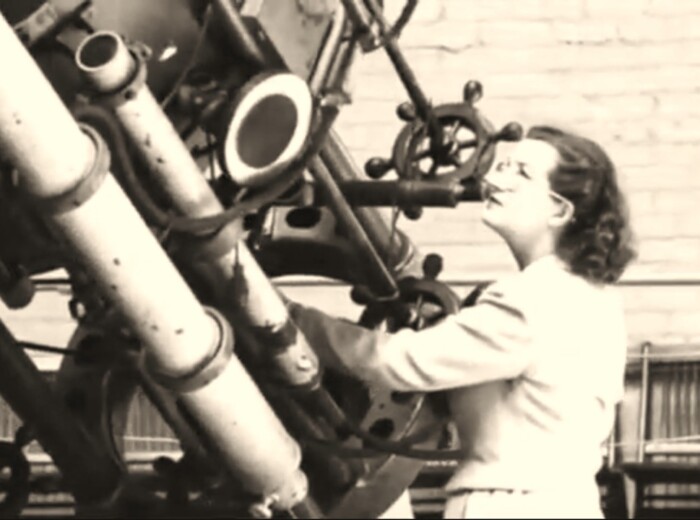
Roman was born on May 16, 1925, in Nashville, Tennessee, and never married or had children, devoting her life fully to astronomy. She earned a Bachelor of Arts in Astronomy from Swarthmore College in 1946 and a Ph.D. in Astronomy from the University of Chicago in 1949. Roman joined NASA in 1959, and in 1960 became its first Chief of Astronomy and first woman in an executive position—a pioneering astronomer at a time when women faced steep barriers in science.
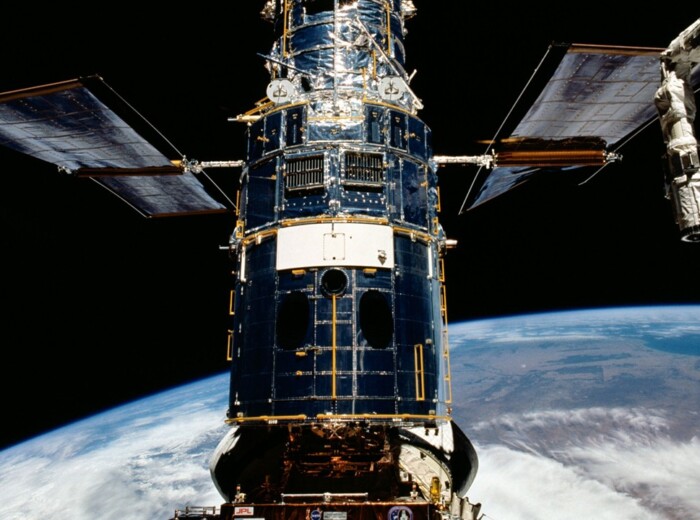
For nearly two decades, she championed the Large Space Telescope that would become Hubble: bringing scientists and engineers together, shaping its scientific objectives, and advocating before Congress for the funding to make it real. That determination earned her the title “Mother of Hubble.” She died on December 25, 2018, in Germantown, Maryland, at the age of 93.
This feature will remain on the CME website for 30 days following launch, then be preserved in CME’s Events Archive. https://www.cme-stem.org/archive-events/?archive_year=2026
She Opened the Heavens
The people and technologies behind Roman
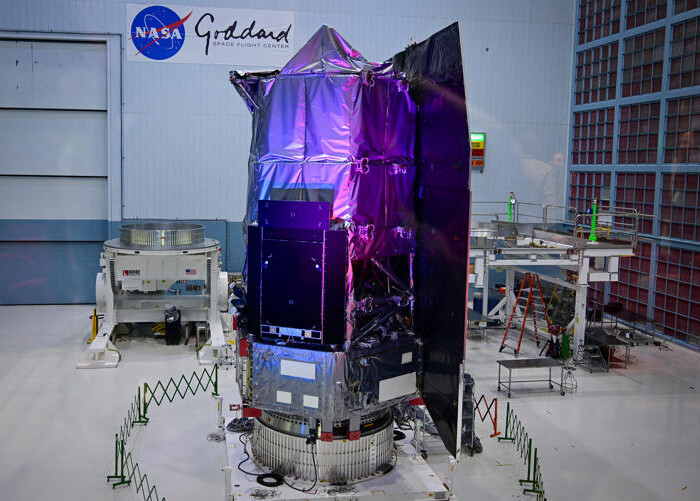
The Nancy Grace Roman Space Telescope is the product of decades of collaboration among NASA, research institutions, and U.S. industry. Thousands of scientists, engineers, and technicians turned an ambitious vision into a flight-ready observatory scheduled for launch on a SpaceX Falcon Heavy on August 30, 2026. Principal industrial partners include:
- BAE Systems — opto-mechanical assembly for the Wide Field Instrument (optical bench, thermal control, and precision mechanisms)
- L3Harris Technologies — Optical Telescope Assembly, including the primary mirror and associated optics
- Teledyne Scientific & Imaging — 18 H4RG-10 infrared detectors that form the Wide Field Instrument’s focal plane
Additional critical contributions came from Northrop Grumman (inertial reference unit for precise pointing) and Honeybee Robotics (mechanisms and actuators), along with many other specialized suppliers.
A Partner to Hubble and Webb
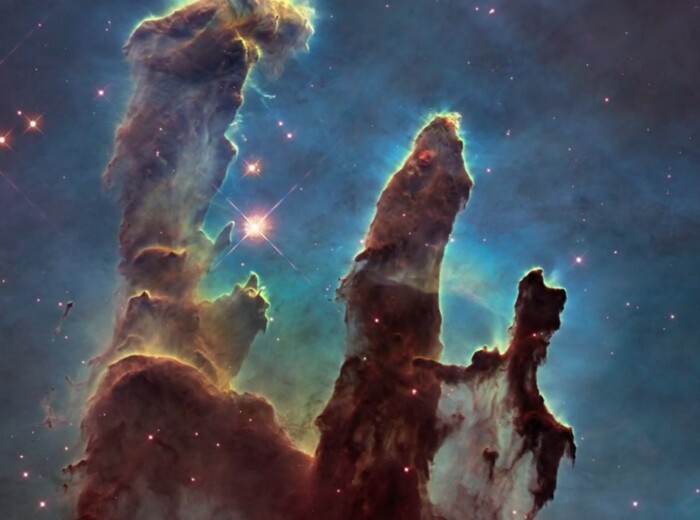
Where Hubble and Webb excel at capturing exquisitely detailed images of individual targets, Roman is built for scale. Its field of view—at least 100 times larger than Hubble’s—lets it survey vast swaths of sky in a single observation, mapping hundreds of millions of galaxies and monitoring billions of stars for the subtle signals of exoplanets and dark energy.
Hubble sees in visible and ultraviolet light with unmatched sharpness; Webb probes deeper into the infrared to study the earliest galaxies and stellar nurseries in fine detail. Roman, also operating in the infrared, trades some of that granular detail for breadth and speed, functioning as a wide-angle survey instrument that can flag the most compelling targets for Hubble and Webb to then examine up close.
Together, the three form a complementary system: Roman surveys the cosmic landscape, while Hubble and Webb zoom in on its most revealing features.
And now, the completed observatory is ready for its next great journey: SpaceX’s Falcon Heavy will carry Roman beyond Earth, where it will begin a mission designed to explore dark energy, dark matter, exoplanets, and the evolution of the universe.
Thousands of people. Hundreds of technologies. One extraordinary observatory—and a new window on the cosmos.
We celebrate not just Roman’s scientific achievements, but her courage and persistence that let humanity see farther. She opened the heavens for all of us—now a new generation of explorers will look through the window she helped create.