
Alanna Schepartz
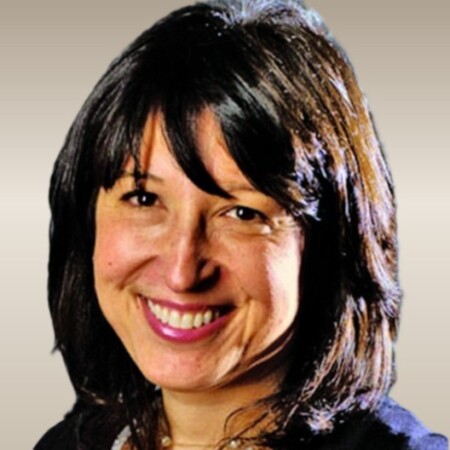
University of California-Berkeley
Chair in Chemistry
Professor of Molecular and Cell BIology
Alanna Schepartz is the T.Z. and Irmgard Chu Distinguished Chair in Chemistry and Professor of Molecular and Cell Biology at the University of California, Berkeley, where she also serves as a Faculty Affiliate of the California Institute for Quantitative Biosciences (QB3). A pioneer in chemical biology, she develops innovative tools to probe and engineer protein function, cellular communication, and biomolecular interactions, with seminal contributions to noncanonical peptide and protein synthesis, membrane protein folding, and synthetic biology. She earned her B.S. in Chemistry from the State University of New York at Albany (1982) and her Ph.D. in Chemistry from Columbia University (1987). After joining Yale University in 1988, she rose to Sterling Professor before moving to Berkeley in 2019. Her numerous honors include election to the National Academy of Sciences (2014), the ACS Ronald Breslow Award for Achievement in Biomimetic Chemistry (2012), the inaugural ACS Chemical Biology Prize (2010), the Ralph F. Hirschmann Award in Peptide Chemistry (2020), the Vincent du Vigneaud Award (2021), and the Wheland Medal (2015). She is Editor-in-Chief of Biochemistry (since 2016). Her h-index is approximately 100 (Google Scholar), reflecting over 400 publications and broad impact in the field.
2026 CME NASA Symposium Abstract – New molecules from nature’s most sophisticated catalyst, the ribosome.
As far as we know, the translational apparatus–the ribosome and its associated translation factors–has evolved for billions of years to perform a single chemical reaction: formation of an amide bond between two α-amino acids brought into proximity by tRNAs within the ribosome active site, the peptidyl transferase center (PTC). This reaction produces sequence-defined polymers of α-amino acids, the molecules we call proteins. In cells, the chemistry possible within a wild type ribosome PTC includes reactions of more than 200 different non-proteinogenic α-amino- and hydroxy acids and a small number of β-amino and hydroxy acids. But there is a big chemical world beyond β-amino and hydroxy acids. One can imagine three different strategies to expand the chemistry of translation further to generate diverse new-to-nature molecules and materials with novel backbone architectures. Such materials, which are most accurately referred to as sequence-defined chemical polymers, offer opportunities for expanded function, predictable structure, tunable stability, and orthogonal reactivity. This lecture will describe recent progress towards these goals.